
“The big changes occur with participation”
February 17, 2011
Interview to the journalist Anna Hohlaki
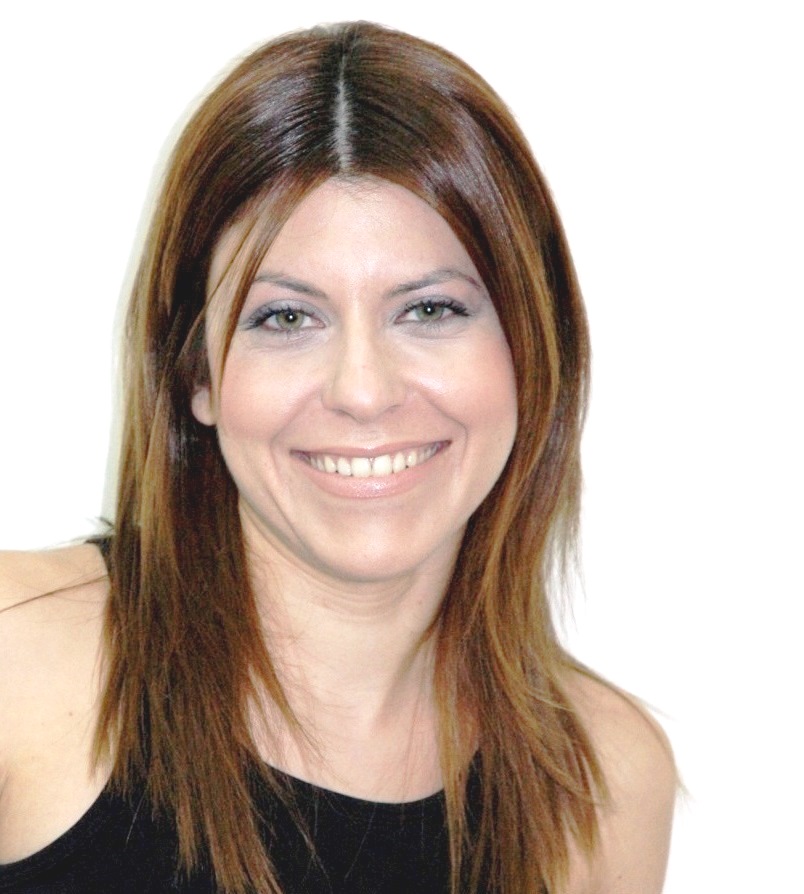 With great asset her studies at Greek and European Universities and her active participation in Unions, Associations and Organizations, the special advisor of the Deputy Minister of Education and regional councilor of Attica, Despina Afentouli, swims already in the deep waters of the Region. Talking to Dytiki Oxthi, she characterizes the application of “Kallikratis” [Law 3852/2010 ‘New Architecture of Local Government and Decentralized Administration – Kallikratis Programme’,] as new experience and challenge at the same time, she insists that the big changes occur with the participation and not with the abstention and she expresses the determination of all the elected of the Attica Region to succeed in their aim, for the common good.
Interview to Anna Hohlaki
The regional administration is asked not just to be put into practice, but to operate directly in favor of the citizens, as KALLIKRATIS predicts. How easy is that?
Undoubtedly, the transition from the old to the new institution is not an easy case, but it requires and demands the implementation of a series of things. Our main goal is the new administrational reformation of “Kallikratis” to be implemented as best as possible. At first stage, our goal is the operational qualification of the services of the prior Regions of Attica which now form the Attica Region, as well as the citizens’ service. The Attica Region’s webpage (www.patt.gov.gr) includes useful information regarding the telephones and addresses of the services. Moreover, it is aimed to restrict the operating costs, with transparency and correct management of the public finance. Then, [it is aimed to focus to] the development and social activities for which we have committed ourselves [to do] during campaigning.
What is the benefit from the new situation that is being formed at regional level?
Through the application of the “Kallikratis” program, our main goal is [not only] the most direct, but also the best quality citizen’s service. With the administrative decentralization, the Municipalities and the Regions become financially independent and play leading role in issues of local interest. The institution of the elected Region and the transparency strengthen the democratic operation of the region. The green development and competition is being promoted at regional level and the Greek law is being adjusted to the European law.
You have lived in England. What are the differences in the local government issues [between England] with Greece?
The comparison of the local government system between the two countries can be done after the full implementation of “Kallikratis” in Greece. In Great Britain, the municipal elections take place every four years. Each municipality is being divided in regions and each region is being represented by three municipal councilors. The local government is being funded by the central state, the municipal taxes, the reclamation of the real estate, but also by the fines, for instance by the illegal parking, the issuance of the buildings permits etc. The council tax is the main top earner of the municipalities and its height varies depending upon each municipality, the region and the objective value of the real estate of each region. The municipalities are responsible for the education (building, maintenance, students’ board etc.), the social services (municipal health offices, social workers, the support of the vulnerable social groups, such as the elderly, the homeless, [and] the underage), the municipal police, the cultural and environment activities, the roads and the pavements, the parks, the civil protection etc. Each new measure is taken after long deliberation with the citizens and is being justified with elaborated study. The citizens are being served directly via telephone, by post or e-mail. The garbage gathering is being normally done once per week. In order to cut the costs, certain municipalities gather the garbage every two weeks. They have provided, however, in advance the citizens with separate garbage cans for recycle, organic or other trashes. Generally, the British local government system operates flexible and substantial in favor of the citizen.
Most European countries have the elected region institution, which practices its own policy, because it has all the institutional and financial means required to do that. Can Greece correspond to that?
At this difficult economic situation, the success of the elected region institution is necessary. Through “Kallikratis” program, all the funds for the Region are insured legislatively. The VAT, the NSRF [the National Strategic Reference Framework], but also the income tax of the natural persons and entities, all are basic sources for the Region. The full utilization of the budget of the NSRF can contribute to the dynamic development of the country. With a lot of work, co-operation and solidarity we can achieve it.
You are elected, first in votes, regional councilor in Eastern Attica. Does this mean greater responsibility?
I have the responsibility spirit since the first time I decided to participate as candidate in the elections. The extent of the responsibility is related first with the conscientiousness and the character of each person and not with the number of the votes. The nomination of our party is a result of common attempt. I feel a great gratitude for the result and I thank warmly my fellow citizens for their trust at the recent regional elections.
What are the jurisdictions that you are going to undertake as regional councilor?
I am the alternate member of the Economic Committee, as well as [I am the alternate member of] the Metropolitan Committee of the Spatial Planning and Urban Regeneration sector.
Every beginning is difficult, they say. Are you afraid of the possibility of the lack of organization?
Indeed, the implementation of “Kallikratis” is a new experience and time is needed, however, it remains a challenge, necessary for the modernization of our country. We do not have time to waste, we are determined to succeed and we will succeed. The Head of the Attica Region, Giannis Sgouros, has local government experience and has shown capacity, consistency, work and correct financial administration, with surplus 217 million Euros as Head of Athens Region. The Attica Region already since January 3, 2011 is at the citizen’s service and we struggle nonstop for the best.
You have rich activity in civic life, despite the fact that you are young in age. What made you devote a great deal of your time, in public activities?
The youth of my age – I am 29 years old – I do not think that it should sound impressive, taken into account that especially at the latest local government elections, participated in many young in age candidates. It is just a matter of priorities. The participation in civic life strengthens the institution of voluntarism and activates the members of the society, so as not to remain simple viewers, but to form together [the civic life]. The big changes occur with the participation and not with the abstention. Each one of us, no matter what position holds, can contribute. As long as there is will.
Your interaction with young people, either through the Ministry of Education, where you are special advisor, or through the local government, gives you the impression that they are occupied with the civic life and politics or are we led to an apolitical society model and to a general lack of interest?
I avoid generalizations. The young people hear the difficult economical period we experience a country and the impact it has at personal level. We live living within a period of reconsideration of many things, which until now were taken for granted. Young people should be encouraged to participate in civic life and to be given the opportunity of real and not typical participation.
What is Despina Afentouli’s personal aim?
The aim is not personal, but common. I strive to contribute in force in promoting Attica and effectively solving the problems of the region.
Source: Dytiki Oxthi / Western Shore (in Greek: Δυτική Όχθη),
Link: www.doxthi.gr/topika/periferia-attikis/1176-l——r——-
Regional newspaper of Northern-Western Attica
Republished: www.afentouli.gr/dytiki-oxthi-2011-02-17